WARNING:This product contains nicotine.Nicotine is an addictive chemical.

Intro
Disposable vapes are easy to buy — but surprisingly easy to buy wrong. The “best” brand for your friend can be the worst fit for you if the nicotine level is off, the draw style feels harsh, or the device can’t last your daily routine.
This guide is a decision tool, not a hype list. In a few minutes, you’ll know exactly what to look for (nicotine, draw style, puff range, recharge needs, and safety signals) so you can choose a disposable vape brand that matches your lifestyle — and avoid the most common “regret purchases.”
Adult-only note: This content is for adult nicotine consumers. Nicotine is addictive.

Quick Decision Checklist (30 seconds)
Copy/paste this table right under the intro:
| Your situation | What to pick | Quick reason |
|---|---|---|
| Switching from cigarettes | Start with a stronger nicotine option, MTL-style draw | Closest “cig-like” satisfaction |
| Casual / flavor-first | Lower to mid nicotine, smoother draw | Better flavor comfort |
| You hate replacing devices often | Rechargeable + higher puff class | Battery can be topped up until e-liquid is used |
| You travel or need long endurance | Higher puff + clear battery/e-liquid indicators | Less surprise “dead device” moments |
| You worry about fakes | Brands with verification + clear support channels | Traceability matters |
Next: If you only do one thing, match nicotine first — then choose draw style — then decide puff range.
Step 1 — Define your goal (so you don’t overpay)
If your goal is to replace cigarettes, prioritize nicotine satisfaction and a draw that feels natural — not the highest puff number. If your goal is flavor enjoyment, you’ll usually be happier with a smoother setup and a brand that’s consistent across flavors. If your goal is pure convenience (travel, long shifts, fewer store trips), then high-puff, rechargeable designs start to make sense.
A quick reality check: most “bad brand” complaints come from a mismatch, not manufacturing defects — wrong nicotine level, wrong draw style, or unrealistic expectations about puff count.
Step 2 — Nicotine strength (and what % really means)
Most disposable vape labels show nicotine as a percentage. A simple conversion many brands use is:
1% ≈ 10 mg/mL, 2% ≈ 20 mg/mL, 5% ≈ 50 mg/mL.
Practical rule:
- 5%: often chosen by heavier smokers who want a stronger hit and faster satisfaction
- 2%: a “balanced daily” option for many adult users
- 1%: smoother and lighter, often preferred for casual use or flavor sampling
Internal link: Nicotine Strength Explained: What 1%, 2%, and 5% Mean
Step 3 — Draw & airflow (why “hit feel” varies by brand)
Two disposables can have the same nicotine % and still feel totally different — because airflow design changes the “hit.”
- MTL (mouth-to-lung): tighter draw, more cigarette-like
- DTL (direct-to-lung): airier draw, bigger vapor, often feels less restrictive
If you’re new or switching from cigarettes, MTL-style options tend to feel more familiar. If you care about bigger clouds and an open inhale, DTL or adjustable airflow can be a better match. Adjustable airflow is useful when you know what you like — otherwise, it can add complexity you don’t need.
Step 4 — Puff count, e-liquid, battery (how to spot marketing)
Puff count is not a universal measurement — it changes with puff length, device power, airflow, and even how fast you chain-vape. That’s why the smartest way to choose is to sanity-check the design:
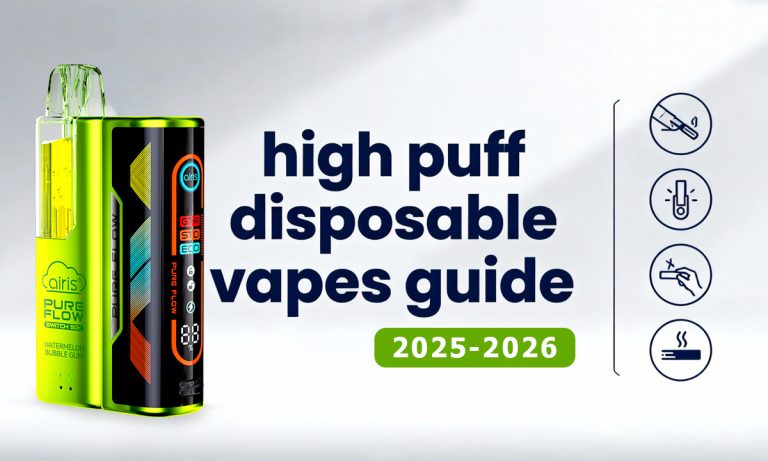
- Higher puff classes usually imply larger e-liquid capacity + a battery that can be recharged
- Look for clear battery/e-liquid indicators if you hate surprises
- If you’re shopping 30K–50K devices, use this as your explainer link:
Internal link: High-Puff Disposables 2025–2026: 30K–50K Guide
If your device is rechargeable, here’s a helpful safety/usage link you already have:
Internal link: How to Recharge a Disposable Vape
Step 5 — Flavor strategy (avoid wasting money)
If you’re testing a new brand, start with flavors that are easiest to judge:
- Mint / menthol
- Single-fruit (watermelon, mango, grape)
- Simple “ice” blends
Be cautious with vague labeling like “mystery flavor.” Transparent brands are usually specific about flavor profile and have consistent naming across batches. If you’ve ever had flavor fade or a weird taste after storage, your expiration/storage guide is a perfect supporting link:
Internal link: Do Disposable Vapes Expire?
Step 6 — How to vet a brand (the trust checklist)
This is the part most “best brand” lists ignore — but it’s what protects users from regret purchases.
Trust checklist (use it like a pre-buy inspection):
- Anti-counterfeit / traceability: does the brand offer verification tools?
- Real support: is there an easy way to contact support for device issues?
- Clear company presence: certifications, documentation, consistent product pages
- Reasonable pricing: extreme discounts are a common red flag
Add these two internal links right inside this section:
Official Resources
Verify, Support & Certification
Use the official links below to verify authenticity, contact support, or view certifications.
Authenticity Check
Verify Products
Confirm your device is genuine using Airis official verification.
Verify Now →
After-sales & Help
Contact Airis Support
Need help with usage, warranty, or product questions? Reach our team here.
Contact Support →
Trust & Compliance
Certification
View Airis certification and compliance information for added confidence.
View Certification →
Step 7 — A simple scoring method (choose in 2 minutes)
Use this 10-point scorecard when comparing brands:
- Nicotine match (0–2 points): do they clearly offer your strength and type?
- Draw comfort (0–2 points): MTL/DTL match + airflow stability
- Consistency (0–2 points): same flavor quality across multiple flavors/users
- Endurance fit (0–2 points): puff class + recharge needs for your routine
- Trust signals (0–2 points): verification + support + clear product details
If two brands tie, choose the one with stronger trust signals — that’s what reduces “dead-on-arrival / fake / no-support” headaches.
FAQ
Quick answers to help you choose the right disposable vape brand.
What nicotine strength should I choose — 1%, 2%, or 5%?
A simple way to think about it is: 1% = lighter, 2% = balanced, 5% = stronger. If you’re switching from cigarettes and want faster satisfaction, many adult users start with higher nicotine. If you vape casually or mainly care about flavor comfort, lower to mid nicotine often feels smoother. If you’re unsure, it’s usually safer to start lower and adjust based on how you feel.
Tip: Add an internal link here to your nicotine chart/strength guide.
Does “higher puff count” always mean the device will last longer?
Not always. Puff count isn’t measured the same way across brands, and real-life results depend on puff length, airflow, power output, and how often you vape. A more reliable approach is to check whether the device is rechargeable, its e-liquid capacity, and whether it provides battery/e-liquid indicators.
Tip: Add an internal link to your high-puff guide (30K–50K).
What’s the difference between MTL and DTL, and which one is better?
MTL (mouth-to-lung) is a tighter draw that feels more like a cigarette. DTL (direct-to-lung) is more open and airy with bigger vapor. Neither is “better” — it’s about comfort. Beginners and ex-smokers often prefer MTL; cloud-focused users may prefer DTL or adjustable airflow.
Can I recharge any disposable vape?
No. Only rechargeable disposables are designed to be recharged. If a device is labeled non-rechargeable, trying to recharge it is not recommended. For rechargeable models, use the correct cable, avoid long unattended charging, and stop using it if it becomes unusually hot or behaves abnormally.
Tip: Add an internal link to your recharge guide.
How can I tell if a disposable vape brand is legit?
Look for traceability and real support. Legit brands usually have clear product pages, consistent packaging, and a way to verify authenticity (or official channels to confirm batches). Be cautious with deals far below typical market price, unclear labeling, or sellers who can’t explain where inventory came from.
- Add links: Verify Products + Contact Support
What should I check before buying a high-puff disposable (20K–50K)?
- Rechargeability (so you can actually finish the e-liquid)
- Battery consistency (stable output matters more than peak power)
- Leak resistance & build quality (capacity increases risk if design is weak)
- Indicators (battery/e-liquid display reduces surprises)
Why do some brands feel harsh even at the same nicotine level?
Harshness can come from differences in airflow design, coil/mesh setup, power tuning, and even cooling agents used in flavors. Two devices with the same nicotine % can feel very different. If you’re sensitive to harsh hits, start with smoother profiles and avoid aggressive “ice” flavors when testing a new brand.
How do I choose flavors without wasting money?
Start with “easy to judge” flavors: mint/menthol, single fruits (mango, grape, watermelon), or simple ice blends. Once you trust a brand’s consistency, move to complex desserts or mixed profiles. Storage can also affect taste over time.
Tip: Add an internal link to your storage/expiry guide.
What’s the safest “first disposable vape” choice for beginners?
A beginner-friendly choice is usually simple, consistent, and predictable: minimal settings, comfortable draw, and a nicotine level that matches your goal (switching vs casual). Use one device for a few days, then adjust one factor at a time (nicotine, draw, puff class, or flavors).
My disposable vape isn’t hitting — is it a brand problem?
Not always. Many “not hitting” issues are caused by battery level, airflow blockage, cold temperatures, or storage issues. Try quick troubleshooting steps before you write off a brand — especially with rechargeable/high-puff devices.
Tip: Add an internal link to your “Disposable Vape Not Hitting? 10 Quick Checks” article.